प्रदेश लोक सेवा आयोग
लुम्बिनी प्रदेश
प्रदेश निजामती सेवा तथा स्थानीय सरकार सेवाका प्रशासकीय तर्फका स्वास्थ्य सेवा, नर्सिङ्ग नर्सिङ्ग उपसमूह, सहायकस्तर अ.न.मि. चौथो तह, स्थायी नियुक्तिका लागि लिएको खुला प्रतिस्पर्धात्मक लिखित परीक्षा
मिति: २०८२/०२/२३
पत्र: द्वितीय समय: २ घण्टा ३० मिनेट
विषय: सेवा सम्बन्धी पूर्णाङ्क: 100
सबै प्रश्न अनिवार्य छन्। प्रश्नहरुको उत्तर खण्ड (Section) अनुसार क्रमसङ्ख्यामा उल्लेखबमोजिम क्रमबद्ध रुपमा लेख्नुहोस्। परीक्षामा मोबाइल लगायतका विद्युतीय उपकरणहरुको प्रयोग गर्नु पाइँदैन।
PDF लास्ट मा छ !
Section-A (Marks-50)
- What is digestive system? Describe function of liver. [1+4=5]
Digestive System
The digestive system, also known as the gastrointestinal (GI) system, is a group of organs working together to convert food into energy and basic nutrients to feed the entire body. It consists of the digestive tract (a long, twisting tube from the mouth to the anus) and accessory organs (like the liver, pancreas, and gallbladder) that produce enzymes and secretions necessary for digestion.Functions of the Liver (4 Marks)
The liver is the largest internal organ and a vital accessory organ of the digestive system with numerous critical functions. The main functions include:
- Metabolic Functions:The liver plays a central role in metabolism.
- Carbohydrate Metabolism:It maintains normal blood glucose levels by storing glucose as glycogen (glycogenesis) and releasing it when needed (glycogenolysis).
- Fat Metabolism:It synthesizes cholesterol and triglycerides and produces bile, which is essential for emulsifying and digesting fats in the small intestine.
- Protein Metabolism:It synthesizes most plasma proteins, such as albumin (which maintains blood volume) and clotting factors (like fibrinogen and prothrombin).
- Production of Bile:The liver produces bile, a greenish-yellow fluid that is stored in the gallbladder. Bile salts emulsify fats, breaking large fat globules into smaller droplets, which increases the surface area for enzymes to act upon, thus aiding in fat digestion and absorption.
- Detoxification:The liver acts as the body’s primary filter. It detoxifies the blood by breaking down and eliminating harmful substances, such as alcohol, drugs, toxins, and metabolic waste products like ammonia (which it converts to urea).
- Storage:The liver is a major storage site for essential nutrients. It stores:
- Glycogen (a readily available source of energy).
- Vitamins (fat-soluble vitamins A, D, E, K, and vitamin B12).
- Minerals (such as iron and copper).
- Phagocytosis:The liver contains specialized phagocytic cells called Kupffer cells, which are part of the reticuloendothelial system. These cells remove old red blood cells, white blood cells, and bacteria from the blood as it passes through the liver.
- Describe about menstrual cycle. [5]
The menstrual cycle is the regular, natural process of hormonal and physiological changes that occur in the female reproductive system to prepare the body for a potential pregnancy. It typically lasts about 28 days but can vary. The cycle is controlled by hormones produced by the hypothalamus, pituitary gland, and ovaries (FSH, LH, estrogen, and progesterone). It is characterized by four main phases:
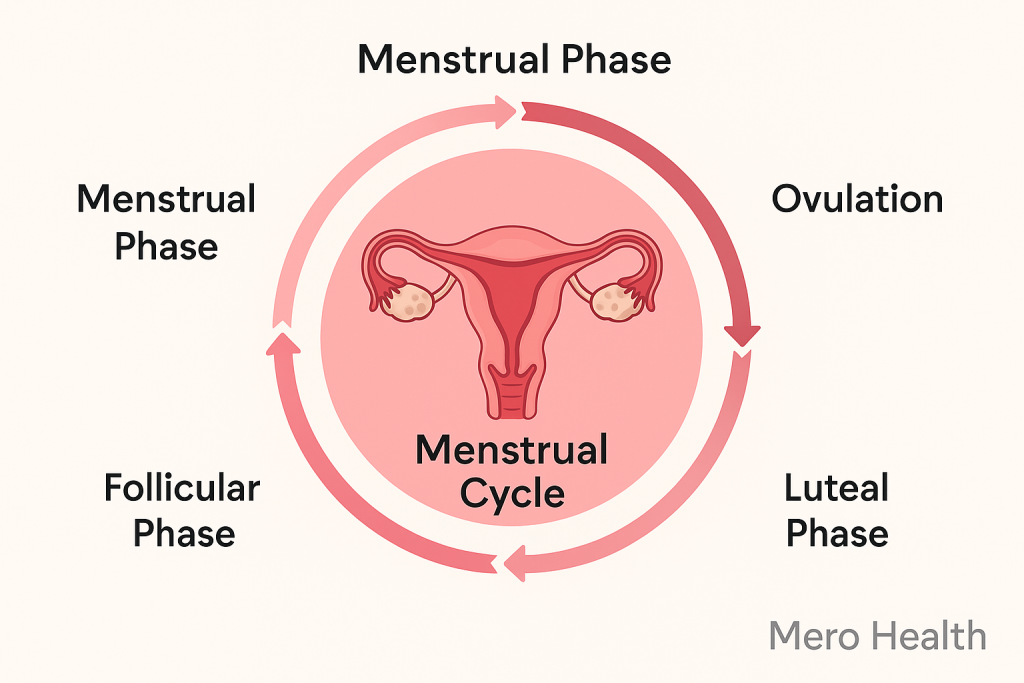
- Menstrual Phase (Days 1-5):
- This phase begins on the first day of menstruation (bleeding).
- If pregnancy has not occurred, the levels of estrogen and progesterone drop significantly.
- This hormonal drop causes the breakdown and shedding of the uterine lining (endometrium), which is expelled from the body through the vagina along with blood and mucus.
- Follicular (Proliferative) Phase (Days 6-14):
- This phase begins after menstruation ends and overlaps with the ovarian follicular phase.
- The pituitary gland releases Follicle-Stimulating Hormone (FSH), which stimulates the growth of several ovarian follicles. Each follicle contains an immature egg.
- As the follicles grow, they produce estrogen. The rising estrogen levels cause the endometrium to thicken and become enriched with blood vessels and glands, preparing it for a potential pregnancy.
- Ovulation (Around Day 14):
- A surge in Luteinizing Hormone (LH), triggered by high estrogen levels, causes the most mature follicle to rupture and release its egg from the ovary.
- This release of the egg is called ovulation. The egg then travels into the fallopian tube, where it can be fertilized by sperm.
- Luteal (Secretory) Phase (Days 15-28):
- After ovulation, the ruptured follicle transforms into a structure called the corpus luteum.
- The corpus luteum produces high levels of progesterone and some estrogen.
- Progesterone further prepares the endometrium for implantation by making it more vascular and glandular (secretory).
- If fertilization and implantation occur, the corpus luteum continues to produce progesterone. If not, the corpus luteum degenerates, causing a sharp drop in progesterone and estrogen levels, which triggers the start of the next menstrual phase.
- Write the step by step procedure to catheterize female patient. [1+4=5]
What is Catheterization? (1 Mark)
Urinary catheterization is a medical procedure that involves inserting a sterile, flexible tube called a catheter through the urethra and into the bladder to drain urine. It is done for diagnostic or therapeutic purposes.
Step-by-Step Procedure for Female Catheterization (4 Marks)
This is a sterile procedure that requires precision and care to prevent infection.
- Preparation and Explanation:
- Explain the procedure to the patient to gain her cooperation and reduce anxiety.
- Ensure patient privacy by using screens or curtains.
- Gather all necessary sterile equipment: catheterization tray, appropriate size Foley catheter, antiseptic solution (e.g., povidone-iodine), sterile gloves, sterile lubricant, syringe with sterile water (to inflate the balloon), and a urine collection bag.
- Patient Positioning and Hand Hygiene:
- Position the patient comfortably in the dorsal recumbent position (lying on her back with knees flexed and separated).
- Perform thorough hand washing with soap and water.
- Aseptic Technique and Perineal Cleansing:
- Open the sterile catheterization tray using aseptic technique.
- Put on sterile gloves.
- Using your non-dominant hand (now considered non-sterile), gently separate the labia majora to expose the urethral meatus.
- With your sterile dominant hand, use forceps and cotton balls soaked in antiseptic solution to clean the perineal area. Clean from front to back (from clitoris towards the anus), using a new cotton ball for each stroke: one for the far labial fold, one for the near labial fold, and one directly over the urethral meatus.
- Catheter Insertion:
- Pick up the sterile catheter with your dominant hand. Lubricate the tip of the catheter (about 1-2 inches) with sterile water-soluble lubricant.
- Ask the patient to take a slow, deep breath to relax the sphincter muscles.
- Gently insert the lubricated catheter into the urethral meatus in an upward and backward direction until urine begins to flow (approximately 2-3 inches).
- Once urine flows, advance the catheter another 1-2 inches to ensure it is fully in the bladder.
- Inflation and Securing:
- If using an indwelling (Foley) catheter, inflate the balloon with the pre-filled syringe of sterile water as per the manufacturer’s instructions. Gently pull on the catheter to feel the resistance, confirming the balloon is secure in the bladder.
- Connect the end of the catheter to the sterile drainage bag.
- Secure the catheter tubing to the patient’s inner thigh with tape, allowing some slack to prevent tension on the urethra.
- Document the procedure, including the date, time, catheter size, amount of urine drained, and the patient’s tolerance of the procedure.
- What is first aid? Write the principles of first aid management. [1+4=5]
What is First Aid? (1 Mark)
First aid is the immediate and temporary care given to a person who has been injured or is suddenly taken ill, before the arrival of professional medical assistance. Its primary goal is to preserve life and minimize the consequences of injury or illness until proper medical help can be obtained.
Principles of First Aid Management (4 Marks)
The core principles of first aid are often remembered by the “3 Ps”:
- Preserve Life:This is the utmost priority. All actions taken should be to save the victim’s life. This includes:
- Assessing for dangers to yourself, the victim, and bystanders (DRSABCD – Danger, Response, Send for help, Airway, Breathing, Circulation, Defibrillation).
- Managing life-threatening conditions first, such as severe bleeding, cessation of breathing, or cardiac arrest.
- Performing CPR or controlling hemorrhage as needed.
- Prevent Further Harm (or Worsening of the Condition):The first aider must ensure that the victim’s condition does not deteriorate. This involves:
- Moving the victim only if they are in immediate danger (e.g., from fire, traffic).
- Immobilizing fractures to prevent further tissue damage.
- Applying sterile dressings to wounds to prevent infection.
- Making the victim comfortable and keeping them warm to prevent shock.
- Promote Recovery:This principle involves taking steps to aid the healing process and reduce long-term disability. This includes:
- Providing reassurance and emotional support to the victim, which can reduce anxiety and pain.
- Applying a bandage, sling, or cooling a burn with water.
- Arranging for prompt medical help by calling an ambulance or transporting the patient to a health facility.
- Assess the Situation:Before acting, a first aider must quickly and calmly assess the entire situation to understand what has happened, how many people are injured, and if any hazards are present. This initial assessment guides all subsequent actions.
- What is home visiting? Describe principles of home visiting. [1+4=5]
What is Home Visiting? (1 Mark)
Home visiting is a professional service delivery strategy where a healthcare provider, such as an ANM, visits individuals and families in their own homes. The purpose is to provide direct care, health education, counseling, and support, and to assess the family’s health status and living environment. It is a cornerstone of community health nursing.
Principles of Home Visiting (4 Marks)
- Purpose and Objectives:Every home visit must have a clear purpose and specific, achievable objectives. The ANM should know why she is visiting the family, whether it’s for postnatal care, immunization follow-up, TB treatment observation, or general health promotion.
- Planning and Preparation:A successful visit is a well-planned one. This includes:
- Reviewing the family’s health records beforehand.
- Scheduling the visit at a time convenient for the family.
- Preparing necessary equipment and educational materials (e.g., vaccine carrier, weighing scale, flip charts).
- Establish Rapport and Trust:The ANM must build a positive, trusting relationship with the family. This is achieved by being friendly, respectful, empathetic, and non-judgmental. Listen to the family’s concerns and respect their culture, values, and beliefs.
- Family-Centered Approach:The focus of the visit should be the family as a unit, not just an individual. Assess the health needs of all members and consider the family’s social and economic situation. Empower the family to identify their own health problems and participate in finding solutions.
- Health Education:A key component of every home visit is health education. Use simple, understandable language and appropriate teaching aids to educate the family on topics like nutrition, hygiene, family planning, and disease prevention.
- Write the treatment pattern of tuberculosis according to DOTS program. [5]
The DOTS (Directly Observed Treatment, Short-course) program is the WHO-recommended strategy for controlling Tuberculosis (TB). Its core component is ensuring that patients take their full course of medication under the direct observation of a healthcare worker or a trained community member.
The treatment pattern for new, previously untreated, drug-susceptible pulmonary TB is divided into two phases:
- Intensive Phase (IP):
- Duration:2 months (8 weeks).
- Purpose:To rapidly kill the actively multiplying tubercle bacilli, making the patient non-infectious quickly and relieving symptoms.
- Drug Regimen:A combination of four first-line anti-TB drugs, often remembered by the acronym HRZE.
- H– Isoniazid
- R– Rifampicin
- Z– Pyrazinamide
- E– Ethambutol
- Frequency:The patient takes these four drugs daily under direct observation.
- Continuation Phase (CP):
- Duration: 4 months (16 weeks).
- Purpose: To eliminate the remaining dormant or semi-dormant bacilli and prevent relapse of the disease.
- Drug Regimen: A combination of two or three drugs, most commonly HR.
- H – Isoniazid
- R – Rifampicin
- (Sometimes Ethambutol is included, making it HRE).
- Frequency: The patient takes these drugs daily or thrice a week (depending on the national protocol) under direct observation.
Key Element of DOTS:
The “Directly Observed” aspect is crucial. A health worker (like an ANM) or a trained community volunteer meets the patient every day (or as scheduled) to watch them swallow their pills. This ensures adherence, prevents the development of drug-resistant TB, and provides an opportunity for patient support and monitoring of side effects. The total duration of treatment for a new case is typically 6 months.
- What is immunization schedule of Nepal? How do you maintain cold chain of vaccine in a PHC? Describe. [5+5=10]
National Immunization Schedule of Nepal (5 Marks)
The National Immunization Program (NIP) of Nepal provides free vaccines to protect children against various life-threatening diseases. The schedule is as follows:
How to Maintain the Cold Chain in a PHC (Primary Health Care Center) (5 Marks)
The cold chain is the system of storing and transporting vaccines at the recommended temperature range (+2°C to +8°C) from the point of manufacture to the point of use. Proper maintenance is critical for vaccine potency.
In a PHC, the cold chain is maintained through the following measures:
- Proper Equipment and Storage:
- Ice-Lined Refrigerator (ILR): This is the primary storage unit at a PHC. It is designed to maintain a stable temperature between +2°C and +8°C even during power outages of several hours.
- Deep Freezer: Used to freeze ice packs (-15°C to -25°C) which are then used in vaccine carriers.
- Arrangement of Vaccines: Vaccines are arranged correctly inside the ILR. Freeze-sensitive vaccines (like DPT-HepB-Hib, PCV, IPV, Td) are kept in the upper baskets, while heat-sensitive vaccines (like OPV, MR, BCG, JE) are kept in the lower baskets. Diluents are stored with their corresponding vaccines. No other items (food, drinks) should be stored in the vaccine refrigerator.
- Temperature Monitoring:
- A dial thermometer or stem thermometer is placed in the ILR.
- The temperature is checked and recorded on a temperature chart twice a day (once in the morning and once in the evening).
- The “Shake Test” is performed on freeze-sensitive vaccines if freezing is suspected.
- Vaccine Vial Monitors (VVMs) on vaccine vials are checked before use. If the inner square is the same color as or darker than the outer circle, the vaccine must be discarded.
- Transportation for Outreach/Sessions:
- Vaccine Carriers and Cold Boxes: These are used to transport vaccines to outreach clinics or immunization sessions.
- Conditioned “frozen” ice packs are placed correctly inside the carriers to maintain the temperature. The vaccine vials are packed in a zip-lock bag to prevent direct contact with the ice packs, which could freeze them.
- Contingency Planning:
- A plan must be in place for power failures. This includes ensuring the ILR is not opened unnecessarily and having arrangements to transfer vaccines to an alternative facility if the power outage is prolonged.
- Write the management and preventive measures of typhoid and hypertension in community level. [5+5=10]
Management and Preventive Measures of Typhoid at Community Level (5 Marks)
Management:
The role of an ANM at the community level focuses on early identification, referral, support, and health education.
- Early Identification and Referral: Identify individuals with symptoms of typhoid (prolonged high fever, headache, weakness, abdominal pain, loss of appetite) and refer them promptly to a health facility for diagnosis and treatment.
- Supportive Care: Advise the family on supportive care, including ensuring the patient gets adequate rest, maintaining hydration with Oral Rehydration Solution (ORS) or clean fluids, and consuming a soft, nutritious diet.
- Ensuring Treatment Compliance: Follow up with the patient to ensure they complete the full course of antibiotics prescribed by the doctor to prevent relapse and the development of a carrier state.
- Health Education: Educate the patient and family on how typhoid spreads to prevent transmission to others (e.g., proper handwashing after using the toilet).
Preventive Measures:
- Safe Drinking Water: Promote the use of safe drinking water by boiling, filtering, or using chlorine tablets.
- Proper Sanitation: Advocate for the use of sanitary latrines and the safe disposal of feces.
- Food Safety and Hygiene: Educate the community on the importance of washing hands with soap before eating and after using the toilet, washing fruits and vegetables thoroughly, and avoiding food from unhygienic street vendors.
- Vaccination: Inform the community about the availability and importance of the typhoid vaccine, especially for children.
Management and Preventive Measures of Hypertension at Community Level (5 Marks)
Management:
- Screening and Early Detection: Regularly screen adults (especially those over 30) for high blood pressure during home visits or at clinics. Use a calibrated BP apparatus.
- Referral: Refer individuals with consistently high BP readings to a health facility for confirmation of diagnosis and initiation of treatment.
- Promoting Adherence to Treatment: Counsel patients on the importance of taking their medication regularly as prescribed, even if they feel well. Explain that hypertension is often a lifelong condition that needs continuous management.
- Lifestyle Counseling: Provide continuous counseling on necessary lifestyle changes (see below).
Preventive Measures (and Management through Lifestyle Modification):
Prevention is key and is based on promoting a healthy lifestyle.
- Dietary Changes (DASH Diet principles):
- Reduce Salt Intake: Advise limiting salt and avoiding processed, canned, and pickled foods.
- Increase Fruits and Vegetables: Encourage a diet rich in potassium.
- Limit Fat Intake: Advise avoiding saturated and trans fats.
- Regular Physical Activity: Promote at least 30 minutes of moderate-intensity exercise (like brisk walking) most days of the week.
- Maintain a Healthy Weight: Counsel on weight loss for overweight or obese individuals.
- Avoid Harmful Substances: Strongly advise against tobacco use (smoking or chewing) and limiting alcohol consumption.
- Stress Management: Teach simple stress-reduction techniques like deep breathing, meditation, or engaging in hobbies.
Section-B (Marks-50)
- What is in-service training? Write purposes of in-service education. [2+3=5]
What is In-service Training? (2 Marks)
In-service training (or in-service education) refers to the planned educational activities and training programs provided to employees while they are actively employed in their jobs. It is a form of continuing education designed to update and enhance their existing knowledge, skills, and competencies, ensuring they remain effective and efficient in their roles.
Purposes of In-service Education (3 Marks)
The primary purposes of in-service education for health workers like ANMs are:
- To Update Knowledge and Skills: Healthcare is a constantly evolving field. In-service training keeps staff informed about the latest medical advancements, new treatment guidelines (e.g., new vaccine introductions, updated drug regimens), new technologies, and revised government health policies.
- To Improve Quality of Care and Performance: By refreshing old skills and teaching new ones, in-service training directly contributes to improving the quality and safety of patient care. It helps in standardizing procedures and reducing errors, leading to better health outcomes for the community.
- To Enhance Job Satisfaction and Motivation: Providing opportunities for professional growth shows that the organization values its employees. This can boost morale, increase job satisfaction, and motivate staff to perform their duties with greater enthusiasm and commitment. It can also prepare them for future responsibilities or promotions.
- List the health problems of adolescents of a girl. [5]
Adolescent girls face a unique set of health challenges that span physical, mental, and social domains. Key health problems include:
- Nutritional Problems:
- Iron Deficiency Anemia: Very common due to menstrual blood loss, poor dietary intake of iron, and increased nutritional demands for growth. Leads to fatigue, weakness, and poor concentration.
- Malnutrition: This can be undernutrition (stunting, thinness) or overnutrition (overweight/obesity), both leading to long-term health issues.
- Menstrual and Reproductive Health Issues:
- Menstrual Disorders: Problems like dysmenorrhea (painful periods), irregular cycles, and heavy bleeding are common and can affect daily life.
- Early and Unwanted Pregnancy: Lack of knowledge about reproductive health can lead to early pregnancy, which poses significant health risks to both the young mother and her baby.
- Sexually Transmitted Infections (STIs) and HIV: Unsafe sexual practices can lead to infections.
- Mental Health Problems:
- Depression, Anxiety, and Stress: Adolescence is a period of emotional turmoil. Peer pressure, academic stress, body image issues, and family conflicts can lead to significant mental health challenges.
- Eating Disorders: Conditions like anorexia nervosa and bulimia can arise from societal pressure regarding body weight and shape.
- Substance Abuse: Experimentation with and abuse of substances like tobacco, alcohol, and other drugs is a major risk during adolescence, leading to addiction and long-term health damage.
- Violence and Abuse: Adolescent girls are particularly vulnerable to gender-based violence, including sexual harassment, abuse, and exploitation, which has severe physical and psychological consequences.
- Explain about after pain with a woman. [5]
“After pains” (or afterpains) are intermittent, cramp-like pains felt in the lower abdomen by a woman after she has given birth. They are a normal and important part of the postpartum period.
- Cause: After pains are caused by the contractions of the uterine muscles. After the delivery of the baby and placenta, the uterus must contract firmly to shrink back to its pre-pregnancy size (a process called involution). These contractions also serve a vital function: they compress the blood vessels at the site where the placenta was attached, which helps to control and prevent postpartum hemorrhage (PPH).
- Who Experiences Them?
- Multiparous Women: After pains are more common and often more intense in women who have had previous births (multiparous) compared to first-time mothers (primiparous). This is because the uterine muscle tone is slightly reduced after multiple pregnancies, so it requires stronger contractions to achieve involution.
- Breastfeeding Mothers: The pains are often more noticeable during breastfeeding. The baby’s suckling stimulates the pituitary gland to release the hormone oxytocin. Oxytocin is the same hormone that causes uterine contractions during labor, and it continues to cause the uterus to contract after birth, leading to after pains.
- Nursing Management and Reassurance:
- Explanation: The ANM should explain to the woman what after pains are and that they are a normal and positive sign that her uterus is returning to a healthy state.
- Encourage Breastfeeding: Reassure her that the pains felt during breastfeeding are beneficial as they help prevent bleeding and speed up recovery.
- Comfort Measures: Suggest simple comfort measures like lying on her stomach (prone) with a pillow placed under her lower abdomen.
- Keep Bladder Empty: A full bladder can displace the uterus and interfere with its ability to contract effectively, potentially worsening the pain. Encourage her to urinate frequently.
- Analgesia: If the pain is severe, a mild analgesic (like paracetamol or ibuprofen), as prescribed by a doctor, can be administered.
- Write the management of 4th stages of labour. [5]
The fourth stage of labor is the critical period of 1-2 hours immediately following the delivery of the placenta. The primary focus of management during this stage is to monitor the mother for complications, especially postpartum hemorrhage (PPH), and to promote maternal-infant bonding.
The key management steps are:
- Frequent Monitoring of Vital Signs:
- Check the mother’s blood pressure, pulse, and respirations every 15 minutes for the first hour, and then every 30 minutes for the second hour. A rising pulse and falling blood pressure can be early signs of shock due to hemorrhage.
- Assessment of the Uterine Fundus:
- Palpate the uterine fundus every 15 minutes. It should be firm, central, and located at or below the level of the umbilicus.
- If the uterus is soft or “boggy,” it should be massaged gently until it becomes firm. A boggy uterus is unable to compress blood vessels and is a major cause of PPH.
- Assessment of Lochia (Vaginal Bleeding):
- Check the amount, color, and consistency of the vaginal bleeding by inspecting the perineal pad.
- Bleeding should be no more than that of a heavy menstrual period. Soaking more than one pad per hour or the presence of large clots is a sign of excessive bleeding and requires immediate attention.
- Inspection of the Perineum:
- Inspect the perineum for any tears, lacerations, or swelling (hematoma). Check any episiotomy or tear repair site for bleeding or oozing.
- Promoting Bonding and Early Breastfeeding:
- Encourage immediate skin-to-skin contact between the mother and baby. This helps to stabilize the baby’s temperature and breathing and promotes bonding.
- Assist the mother to initiate breastfeeding within the first hour of birth. Suckling stimulates oxytocin release, which helps the uterus to contract and reduces bleeding.
- Ensuring Maternal Comfort:
- Provide a warm blanket to prevent chills.
- Offer the mother fluids and a light snack if she is hungry.
- Monitor her bladder for distention and encourage her to void, as a full bladder can interfere with uterine contraction.
- Write the different methods of child assessment including anthropometric measurement. [5]
Assessing a child’s health and development involves a comprehensive approach using several methods. These are crucial for monitoring growth, detecting problems early, and providing timely interventions.
- Anthropometric Measurement:
This involves measuring the physical dimensions of the child’s body to assess growth and nutritional status. Key measurements include:
- Weight: Measured using a calibrated infant weighing scale (like a Salter scale) or a digital scale. Weight-for-age is a key indicator of acute malnutrition.
- Height/Length: Length is measured for children under 2 years using an infantometer (lying down), and height is measured for older children using a stadiometer (standing up). Height-for-age indicates chronic malnutrition (stunting).
- Mid-Upper Arm Circumference (MUAC): Measured with a special tape, MUAC is a quick and effective screening tool for identifying acute malnutrition in children aged 6 months to 5 years.
- Head Circumference: Measured to monitor brain growth, especially in the first two years of life.
- Developmental Assessment (Milestones):
This involves assessing whether the child is achieving developmental milestones appropriate for their age. It covers four main domains:
- Gross Motor: Skills like holding the head up, rolling over, sitting, crawling, and walking.
- Fine Motor: Skills like grasping objects, transferring objects from hand to hand, and pincer grasp.
- Language: Babbling, saying first words, and forming sentences.
- Social and Emotional: Smiling, recognizing familiar faces, and interacting with others.
- Clinical and Physical Examination:
This is a head-to-toe examination to look for signs of illness or congenital abnormalities. It includes:
- Checking the skin for rashes, jaundice, or dehydration (skin turgor).
- Examining the eyes, ears, nose, and throat.
- Listening to the heart and lungs with a stethoscope.
- Palpating the abdomen.
- Checking reflexes.
- Nutritional Assessment:
Beyond anthropometry, this involves checking for specific clinical signs of nutrient deficiencies, such as:
- Pale conjunctiva (anemia).
- Bitot’s spots on the eyes (Vitamin A deficiency).
- Edema of the feet (kwashiorkor).
- Hair changes (discoloration, thinness).
- Observing Behavior and Interaction:
Observing how the child behaves and interacts with their caregiver can provide valuable information about their well-being, temperament, and the quality of the parent-child bond. - Calculate EDD and gestational week of a pregnant woman, whose last menstruation date was 2081/08/12 with regular period intervals. [2.5+2.5=5]
Given:
- Last Menstrual Period (LMP): 2081/08/12 B.S. (12th of Mangsir, 2081)
- Date of Examination (for gestational week calculation): 2082/02/23 B.S. (23rd of Jestha, 2082)
- Calculation of Estimated Date of Delivery (EDD) (2.5 Marks)
We use Naegele’s rule, adapted for the Bikram Sambat calendar: LMP + 9 Months + 7 Days.
- LMP: 2081 / 08 / 12
- Step 1: Add 9 Months to the month:
- 08 + 9 = 17. Since there are only 12 months in a year, we subtract 12 from the month and add 1 to the year.
- Month: 17 – 12 = 5 (Jestha)
- Year: 2081 + 1 = 2082
- The date is now: 2082 / 05 / 12
- Step 2: Add 7 Days to the day:
- 12 + 7 = 19
- The date is now: 2082 / 05 / 19
The Estimated Date of Delivery (EDD) is 2082/05/19 B.S.
- Calculation of Gestational Week (2.5 Marks)
To calculate the gestational age, we count the total number of days from the LMP to the date of examination and divide by 7.
(Note: This requires knowing the number of days in each month of the Bikram Sambat year 2081/2082, which can vary. We will use a standard calendar for this calculation.)
- LMP: 2081/08/12
- Date of Exam: 2082/02/23
Let’s calculate the days:
- Remaining days in Mangsir (Month 08, assuming 30 days): 30 – 12 = 18 days
- Days in Poush (Month 09, assuming 30 days): 30 days
- Days in Magh (Month 10, assuming 29 days): 29 days
- Days in Falgun (Month 11, assuming 30 days): 30 days
- Days in Chaitra (Month 12, assuming 30 days): 30 days
- Days in Baisakh (Month 01 of 2082, assuming 31 days): 31 days
- Days in Jestha (Month 02 of 2082) until the exam date: 23 days
Total number of days: 18 + 30 + 29 + 30 + 30 + 31 + 23 = 191 days
Convert days into weeks:
- 191 days / 7 days per week = 27.28 weeks
The gestational age is 27 weeks and 2 days.
- Describe how do you give APGAR score for a newborn. State steps of immediate care of a healthy newborn baby. [5+5=10]
How to Give an APGAR Score (5 Marks)
The APGAR score is a rapid, simple, and objective assessment of a newborn’s clinical status at 1 minute and 5 minutes after birth. It helps to identify newborns who may need immediate medical attention. The score is based on five components, with each component getting a score of 0, 1, or 2.
The acronym APGAR helps to remember the five components:
|
Component |
Score 0 |
Score 1 |
Score 2 |
|
Appearance (Skin Color) |
Blue or pale all over |
Body pink, extremities blue (acrocyanosis) |
Pink all over |
|
Pulse (Heart Rate) |
Absent (no pulse) |
Below 100 beats per minute |
Above 100 beats per minute |
|
Grimace (Reflex Irritability) |
No response to stimulation |
Grimace or feeble cry to stimulation |
Cries, sneezes, or coughs vigorously |
|
Activity (Muscle Tone) |
Limp, no movement |
Some flexion of extremities |
Active movement, well-flexed |
|
Respiration (Breathing) |
Absent (not breathing) |
Slow, irregular, or weak cry |
Good, strong cry |
Procedure:
- Assess the newborn at 1 minute after birth to determine the initial condition.
- Add the scores for the five components. A total score of 7-10 is normal, 4-6 is moderately depressed, and 0-3 is severely depressed and requires immediate resuscitation.
- Assess again at 5 minutes. If the 5-minute score is less than 7, continue scoring every 5 minutes up to 20 minutes.
Steps of Immediate Care of a Healthy Newborn Baby (5 Marks)
This sequence of care, often called “Essential Newborn Care,” is crucial for a baby’s survival and well-being.
- Dry the Baby and Provide Warmth: Immediately after birth, place the baby on the mother’s abdomen and dry the baby thoroughly with a clean, warm towel. Discard the wet towel and cover the baby and mother with a dry, warm blanket. This prevents hypothermia. Placing the baby skin-to-skin with the mother is the best way to keep them warm.
- Ensure a Clear Airway: In most healthy newborns, breathing starts spontaneously. Simply wiping the baby’s mouth and nose is usually sufficient. Routine suctioning is not recommended for vigorous newborns.
- Delayed Cord Clamping and Cutting: Wait for 1-3 minutes (or until the cord stops pulsating) before clamping and cutting the umbilical cord with a sterile instrument. This allows more iron-rich blood to transfer from the placenta to the baby.
- Initiate Early Breastfeeding: Help the mother to initiate breastfeeding within the first hour of birth. This promotes bonding, provides the baby with vital colostrum, and helps the mother’s uterus to contract.
- Routine Prophylactic Care:
- Vitamin K Injection: Administer an injection of Vitamin K (1 mg for term babies) into the thigh muscle to prevent hemorrhagic disease of the newborn.
- Eye Care: Apply a prophylactic antibiotic eye ointment (like tetracycline) to prevent ophthalmia neonatorum (eye infection).
- Identification and Examination: Place an identification band on the baby. Perform a brief physical examination to check for any obvious abnormalities, weigh the baby, and record the findings.
- Write the principles and purposes of postnatal care. Explain the activities done in each postnatal visit. [2+2+6=10]
Principles of Postnatal Care (PNC) (2 Marks)
- Holistic and Family-Centered: PNC should address the physical, psychological, and social well-being of the mother, the newborn, and the entire family. It should be respectful of cultural practices and involve the family in the care plan.
- Timely and Systematic: Care should be provided at critical intervals after birth, following a recommended schedule of visits, to ensure that potential problems are detected and managed early.
Purposes of Postnatal Care (PNC) (2 Marks)
- To Prevent and Detect Complications: The primary purpose is to monitor the health of both the mother and the newborn to prevent, detect, and manage any complications such as postpartum hemorrhage, infection, pre-eclampsia in the mother, and jaundice, hypothermia, or infection in the baby.
- To Support and Promote Healthy Practices: To provide counseling and support for successful breastfeeding, to educate the family on newborn care (warmth, hygiene, cord care), maternal nutrition, and to provide counseling and services for family planning and birth spacing.
Activities Done in Each Postnatal Visit (6 Marks)
According to the national protocol in Nepal, a minimum of four postnatal checkups are recommended.
First Visit (within 24 hours of birth):
- For the Mother: Check vital signs (BP, pulse, temp). Assess uterine involution (fundus should be firm and at the umbilicus). Check for excessive vaginal bleeding (PPH). Ask about urination and bowel movements.
- For the Newborn: Check for breathing difficulties. Assess for warmth (check for hypothermia). Observe for danger signs. Promote skin-to-skin contact and initiate breastfeeding within the first hour. Give Vitamin K.
Second Visit (on Day 3):
- For the Mother: Ask about her general well-being. Check for fever or signs of infection (foul-smelling lochia, perineal wound infection). Assess breastfeeding technique and address any challenges (e.g., sore nipples).
- For the Newborn: Assess for jaundice. Check the umbilical cord stump for signs of infection (redness, pus). Observe feeding patterns. Reinforce danger signs to the family.
Third Visit (between Day 7 and Day 14):
- For the Mother: Continue to monitor for infection and bleeding. Assess emotional well-being (screen for postpartum blues/depression). Discuss nutrition and rest.
- For the Newborn: Weigh the baby to check for adequate weight gain. Continue to check for jaundice and cord healing. Ensure the baby is feeding well. Check BCG scar.
Fourth Visit (at 6 weeks / 42 days):
- For the Mother: Perform a full postpartum check-up. Check BP and weight. Ensure uterine involution is complete. Provide comprehensive counseling and services for family planning and birth spacing.
- For the Newborn: Perform a complete physical examination. Check weight and growth. Ensure immunization schedule is on track (the 6-week vaccines are due). Address any remaining concerns of the parents.
~The End~
Pfd note
please whatsapp 9700353904