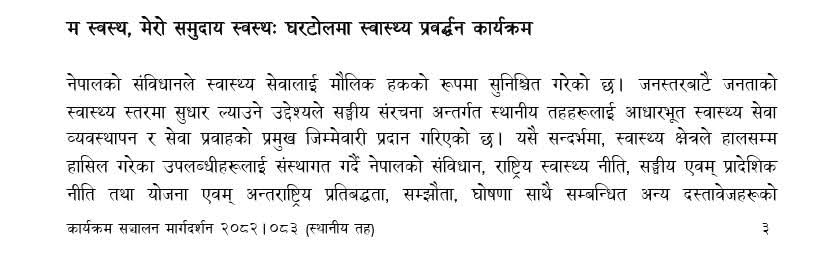
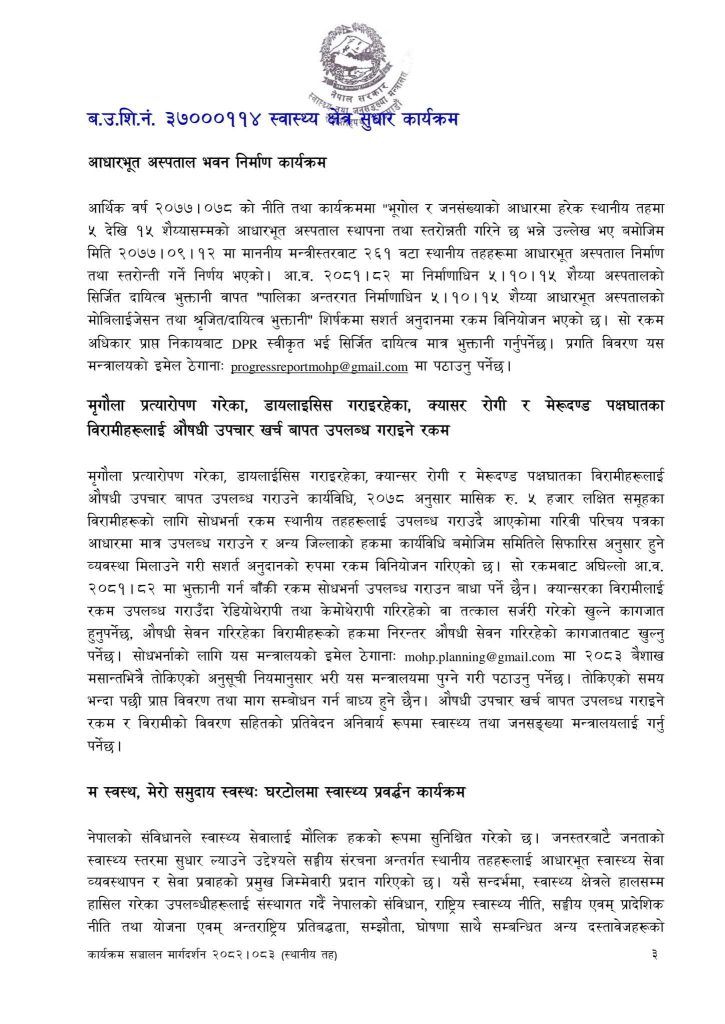
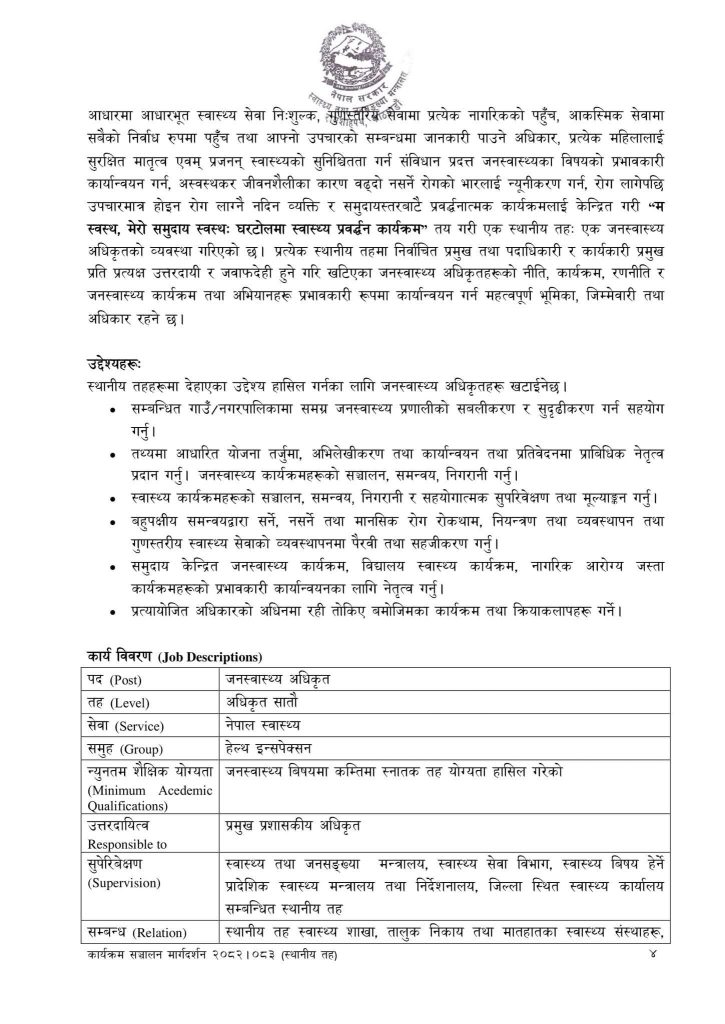
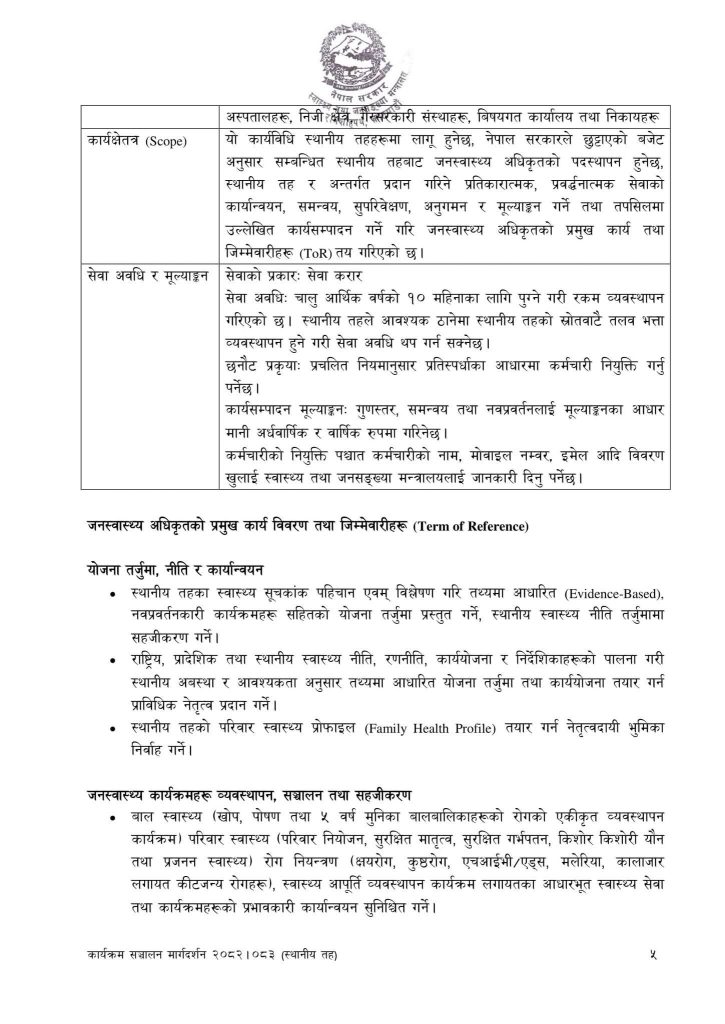
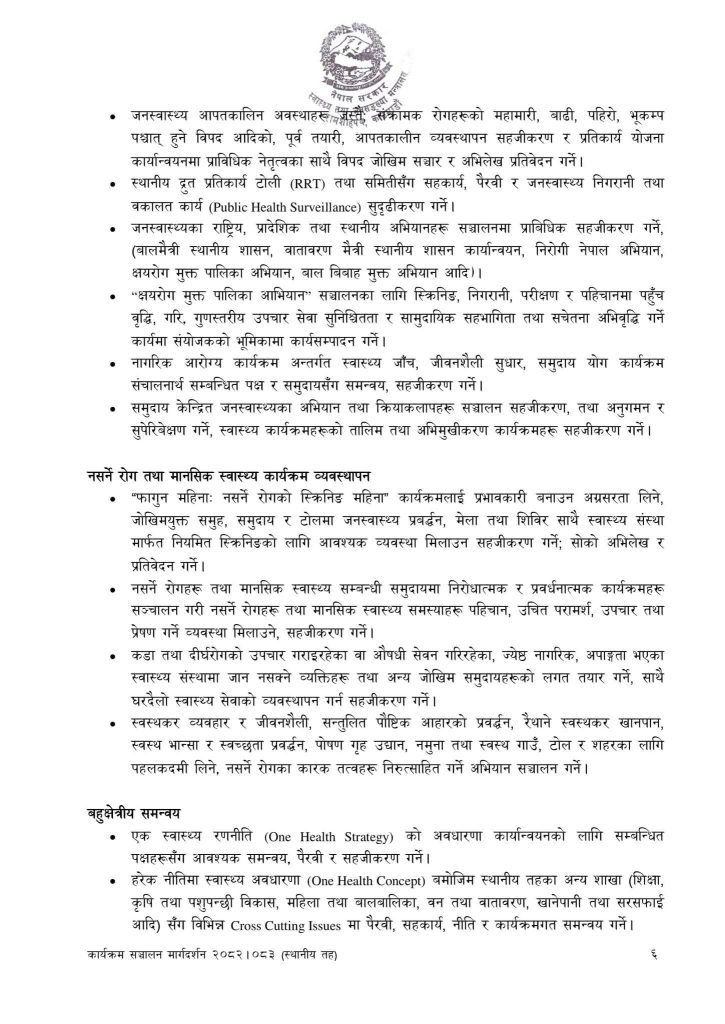
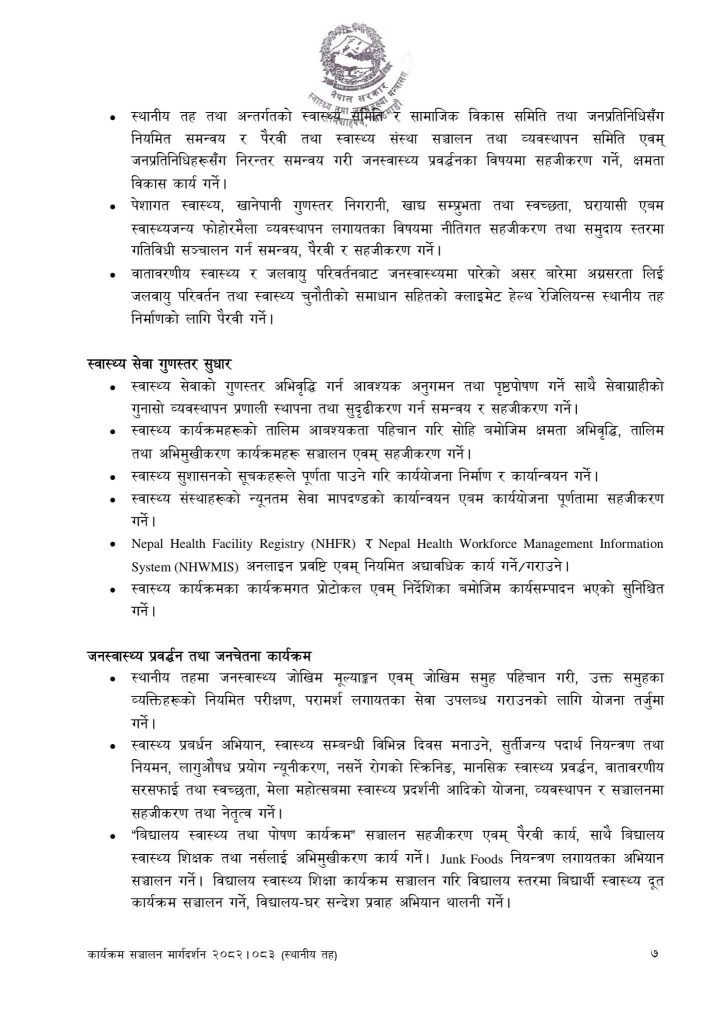
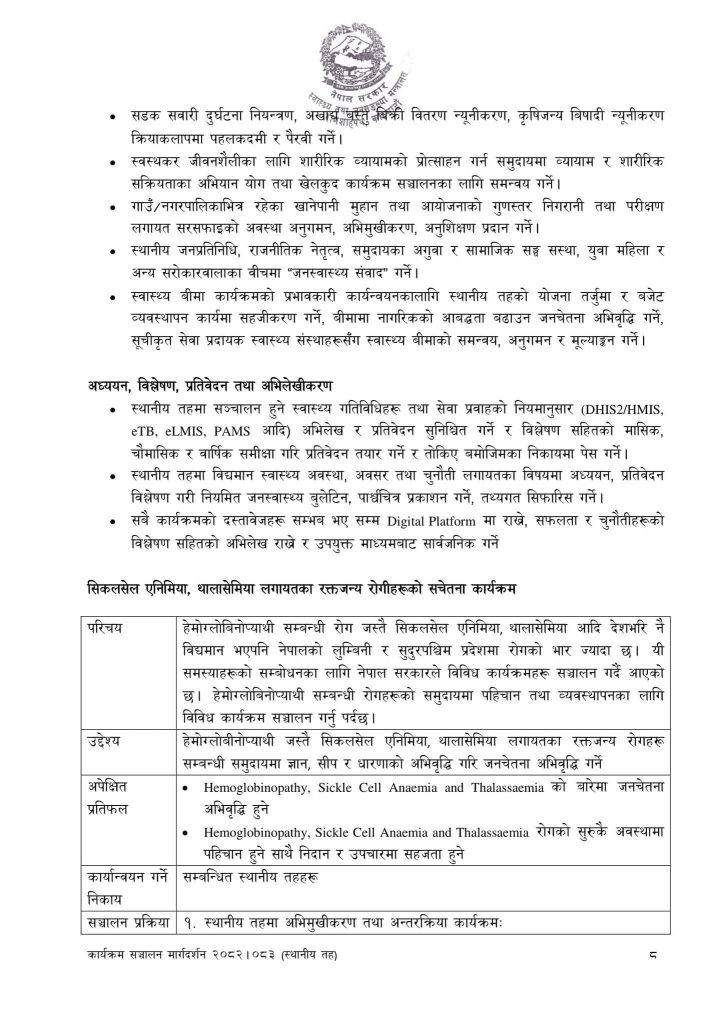
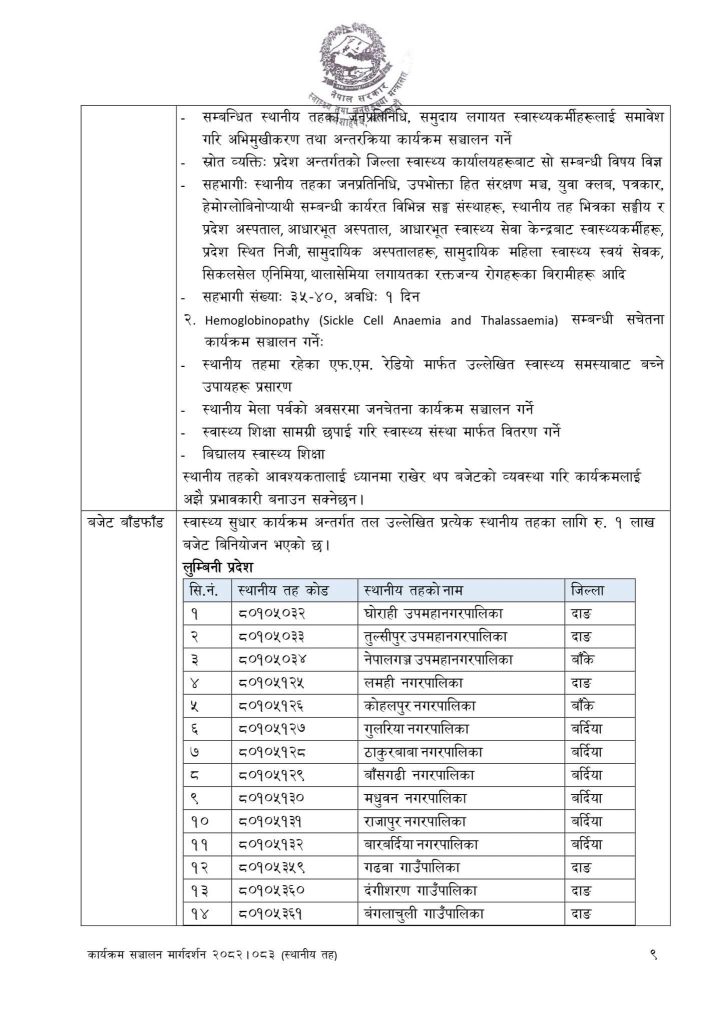
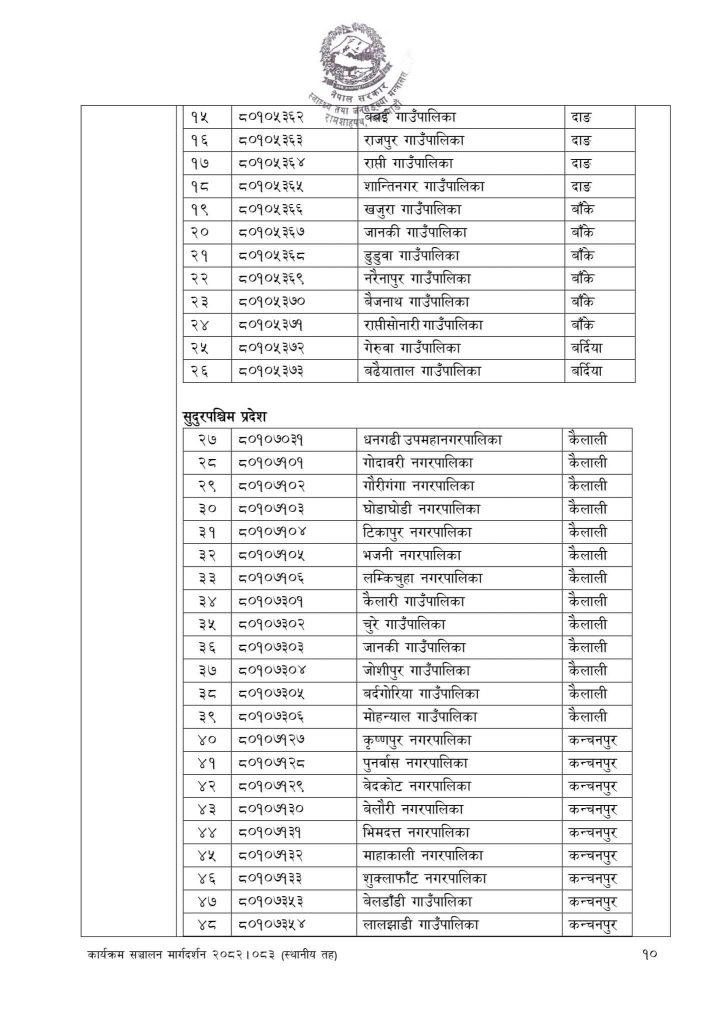
स्थानीय तहहरुमा म स्वस्थ मेरो समुदाय स्वस्थ : घर टोलमा स्वास्थ्य प्रवर्धन कार्यक्रम संचालन गर्न “एक पालिका एक जनस्वास्थ्य अधिकृत”को कार्यविवरण सहित कार्यक्रम कार्यान्वयन गर्ने समेटिएको स्थानीय तहबाट सञ्चालन गरिने स्वास्थ्य तर्फका सशर्त अनुदान अन्गर्गतका कृयाकलापहरु सञ्चालन मार्गदर्शन आएको छ।अन्तत हामीले परिकल्पना गरेको कार्यक्रम कार्यान्वयनको चरणमा पुगेको छ, यसलाई सार्थक तुल्याउन भूमिका निर्वाह गर्ने स्वास्थ्यमन्त्री, स्वास्थ्य सचिव, अतिरिक्त सचिवहरु, नीति योजना महाशाखा प्रमुख, समन्वय महाशाखा प्रमुख लगायत स्वास्थ्य तथा जनसंख्या मन्त्रालयका तत् तत् निकायहरुमा आफ्नो ठोस भूमिका प्रवाह गर्नुहुने सम्बन्धित सबै सरोकारवालाहरु, जनस्वास्थ्य अधिकृतको आवश्यकता महसुस गर्ने स्थानीय तह, प्रदेश तथा नेफा लगायत निरन्तर वकालत गर्ने जनस्वास्थ्यकर्मीहरुलाई धन्यवाद।प्रभावकारी कार्यान्वयनको लागि शुभकामना।
My Health, My Community’s Health — A Local Health Promotion Initiative“My Health, My Community’s Health” is a community-centered health promotion program implemented at the ward and household level through local governments. Guided by the policy “One Municipality — One Public Health Officer”, the program uses targeted conditional health grants to strengthen prevention, awareness, and community participation so that healthier families build healthier communities.About the ProgramThis program supports local governments to deliver structured, evidence-informed health promotion activities in homes and neighborhoods. It empowers municipalities and wards to prioritize primary prevention, maternal and child health, communicable disease prevention, nutrition, sanitation, mental health awareness, and healthy lifestyles through locally-led actions supported by a dedicated Public Health Officer.Program Objectives• Improve community knowledge and practices on priority health topics at household and neighborhood levels.• Strengthen local capacity for planning and delivering health promotion through deployment of Public Health Officers.• Ensure efficient use of conditional health grants for measurable, community-level outcomes.• Build sustainable linkages between communities, local health facilities, and provincial/national health systems.• Promote equity by focusing outreach on vulnerable and marginalized groups.Key Components & Activities• Household & Tole (Neighborhood) Health Promotion – Door-to-door education visits, group talks, and neighborhood campaigns. – Focus topics: maternal & newborn care, immunization, family planning, nutrition, WASH, mental health first aid, NCD prevention, and adolescent health.• Community Events & Outreach – Health camps, screening drives (BP, blood sugar, growth monitoring), and awareness fairs. – School- and youth-focused activities.• Capacity Strengthening & Training – Onsite mentoring and training for local health workers, FCHVs/volunteers, and community leaders. – Orientation for elected representatives on health stewardship and grant management.• Behavior Change Communication (BCC) – Locally-tailored IEC materials, radio spots, social media messaging, and community theater.• Monitoring, Reporting & Accountability – Regular progress reporting, community feedback sessions, and simple indicators tied to conditional grants.“One Municipality — One Public Health Officer”: Role & Job DescriptionPrimary purpose: Lead, coordinate and professionalize community-level health promotion and preventive services within the municipality.Key responsibilities (summary):• Lead development and implementation of local health promotion plans aligned with provincial and national priorities.• Conduct community assessments and identify priority neighborhoods and vulnerable groups.• Coordinate household outreach and supervise community health volunteers.• Design and deliver training for local health staff and volunteers.• Manage and report on the use of conditional health grants; ensure transparency and accountability.• Coordinate with local health facilities, schools, WASH actors, and social services.• Monitor program outcomes and maintain records of key indicators (coverage, attendance, referrals).• Advocate for health within municipal planning and budgeting processes.• Support outbreak preparedness and community-level response when needed.Implementation Roadmap• Orientation & Planning (Month 0–1): Appoint Public Health Officer, conduct stakeholder orientation, prepare micro-plan.• Baseline Assessment (Month 1): Rapid community assessment and mapping of vulnerable households.• Roll-out (Month 2–12): Household visits, tole sessions, school outreach, health camps, and training cycles.• Monitoring & Midline Review (Month 6): Evaluate progress, adapt strategies, reallocate grant resources if needed.• Scale & Institutionalize (After Year 1): Integrate successful practices into municipal plans and budgets.Stakeholders & Their Roles• Local Government (Municipality/Ward): Provide conditional grants, facilitate planning, ensure local ownership.• Public Health Officer: Technical lead for planning, training, supervision and reporting.• Ministry of Health & Population / Provincial Health Offices: Policy guidance, technical support, and oversight.• Health Facilities & Staff: Clinical backup, referrals, and participation in outreach.• Community Volunteers / FCHVs: Doorstep mobilization and follow-up.• Civil Society & NGOs (e.g., NEPHA): Capacity building, advocacy, and technical support.• Community Members & Local Leaders: Participation in design, feedback, and sustainability.Monitoring & Evaluation (simple indicators)• Number of households visited per month.• Attendance at tole health sessions and health camps.• % of pregnant women receiving recommended ANC visits.• Immunization coverage in target wards.• Number of referrals made to health facilities.• Community satisfaction / feedback index.Expected Outcomes (within 12 months)• Increased health knowledge and improved household health behaviors.• Stronger coordination between municipality and health services.• Measurable improvements in key indicators (ANC, immunization, screening uptake).• Local ownership of health promotion activities through formalized Public Health Officer posts.• Sustainable integration of prevention-focused activities into local planning.Success Stories (Template)“After regular tole sessions, the number of mothers bringing infants for growth monitoring at Rauwahi HP increased by 40% in six months.” (Replace with actual data and testimonials as the program progresses.)FAQsQ: Who funds these activities?A: Activities are funded through conditional health grants provided to local governments supported by provincial and national oversight.Q: How will vulnerable groups be reached?A: The Public Health Officer and local volunteers will prioritize home visits and targeted outreach to pregnant women, elderly, people with disabilities, and marginalized families.Q: How can community members get involved?A: Join local health committees, volunteer for outreach, attend community sessions, and give feedback via municipal health forums.Call to Action / ContactIf your municipality or ward would like technical support, training, or a copy of the “My Health, My Community’s Health” implementation toolkit, please contact:Mero Healthline — Program Support TeamEmail: info@merohealthline.orgPhone: +977-XXXXXXXXXXFollow us: [Facebook] [Twitter] [YouTube]